

The Orchestration of Sustainability: Global Circular Plastic Packaging Ecosystem Market Analysis (2026–2036)
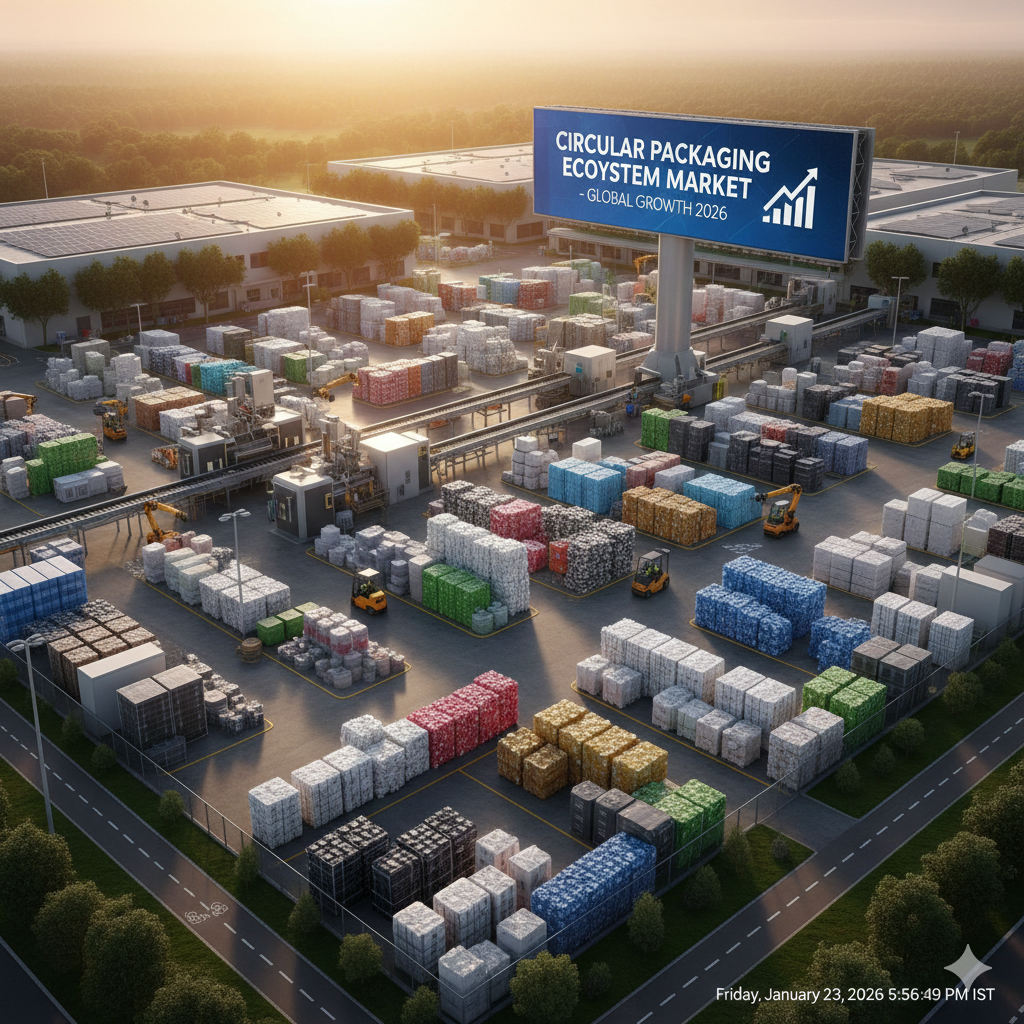
Circular Plastic Packaging Ecosystem Industry
The circular plastic packaging ecosystem market is projected to grow from USD 7.9 billion in 2026 to USD 24.5 billion by 2036, at a CAGR of 12.0%.
NEWARK, DE, UNITED STATES, January 23, 2026 /EINPresswire.com/ -- The global packaging industry is currently undergoing a foundational shift, moving from the historical "linear" model of consumption—characterized by the take-make-dispose cycle—to a complex, managed "circular" ecosystem. As of 2026, spending across the Circular Plastic Packaging Ecosystem Market has reached USD 7.9 billion. However, this is merely the beginning of a high-velocity expansion. Projections indicate the market will surge to USD 24.5 billion by 2036, representing a robust 12.0% CAGR.
This transformation is not a mere branding exercise; it is an overhaul of global material governance. The market is being reshaped by a convergence of stringent regulatory frameworks, Extended Producer Responsibility (EPR) mandates, and aggressive corporate commitments to closed-loop material use.
Defining the Circular Ecosystem: Beyond Material Substitution
In the current market landscape, "circularity" is treated as an operating system rather than a sustainability label. The scope of this ecosystem extends far beyond isolated material substitution. It encompasses a four-pillar program structure:
1. Collection Systems: Developing localized and industrial-scale recovery networks.
2. Sorting Capacity: Integrating AI and robotic separation to improve bale quality.
3. Recycled Resin Integration: Scaling the use of post-consumer recycled (PCR) content in primary packaging.
4. Packaging Redesign: Transitioning to mono-material structures and deinkable coatings.
Brand owners and retailers are the primary architects of this ecosystem. Participation is defined during the portfolio planning stage, where recovery targets and recycled content thresholds are set. Once a packaging family is enrolled in a circular framework, it triggers long-term recovery contracts and public compliance disclosures that are difficult to alter, creating a stable, multi-year revenue stream for ecosystem partners.
Request For Sample Report | Customize Report | Purchase Full Report
https://www.futuremarketinsights.com/reports/sample/rep-gb-31714
Market Dynamics: The Economics of Recovery
The path to USD 24.5 billion is paved with specific milestones. The market value is expected to hit USD 12.4 billion by 2030 and USD 17.5 billion by 2033. This growth is underpinned by wider collection coverage and deeper integration of recycled content into primary pack structures.
Operating economics in this space are unique. Volumes are governed by multi-year agreements linking collection partners, sorters, reclaimers, and converters inside audited systems. Stock policies are no longer just about inventory levels; they prioritize feedstock continuity and grade stability. For converters, success is measured by melt flow stability and the absence of contamination incidents, which can otherwise lead to costly production downtime.
Segmental Leadership: FMCG and Closed-Loop Networks
1. FMCG Food & Beverage: The Volume Anchor
Accounting for 39% of market share, the Fast-Moving Consumer Goods (FMCG) food and beverage segment is the gravitational center of circular investment. The reasons are threefold:
• High Throughput: Frequent turnover necessitates a constant stream of material.
• Regulatory Oversight: Strict food-contact safety standards mean any material quality drift is immediately visible and high-risk.
• Brand Exposure: Large beverage and food giants are under the most public pressure to fulfill "bottle-to-bottle" promises.
2. Closed-Loop Models: Ensuring Material Identity
Closed-loop brand-converter-recycler networks represent 29% of the market. These structures are preferred because they allow brand owners to control the "identity" of their materials. By keeping a proprietary loop, brands can simplify mass-balance accounting and ensure that the resin returning to their factories meets their specific performance and aesthetic specifications.
Regional Growth: The Rise of India and China
The global landscape of the circular plastic packaging ecosystem is undergoing a significant geographic shift, with the primary growth engine moving from established European markets toward high-velocity Asian economies. India leads the global forecast with a 15.4% CAGR, a surge propelled by the intersection of massive e-commerce scaling and the aggressive enforcement of Plastic Waste Management Rules. Domestic brands in India are increasingly integrating circularity into their core operations to stay ahead of rigid Extended Producer Responsibility (EPR) mandates and the rapid expansion of the packaged goods sector.
Close behind is China, projected to grow at a 14.0% CAGR. China's momentum is tied to its sophisticated urban distribution networks and the alignment of the packaging industry with the nation's "dual carbon" goals, which prioritize a drastic reduction in the carbon footprint of industrial materials. In contrast, growth in the United States (11.6% CAGR) is largely corporate-driven, moving forward through private-sector net-zero commitments and the optimization of logistics for sustainable secondary packaging.
Meanwhile, the movement in Germany (11.2% CAGR) and Japan (10.0% CAGR) reflects the stability of mature markets. In Germany, the industry is deeply rooted in strict EU directives, with a technical focus on ensuring that recycled plastics maintain their mechanical stability and barrier properties over multiple reprocessing cycles. Japan’s growth is anchored in a culture of high material standards and meticulous regulatory compliance, ensuring that traceability remains at the forefront of their material governance.
Technical Challenges: The Barrier to Standardization
Despite the aggressive growth, several "friction points" prevent a universal convergence toward a single circular standard:
• Infrastructure Fragmentation: A packaging format that is perfectly recyclable in a German sorting facility may be un-sortable in a municipal plant in the United States.
• Validation Timelines: Every new material combination requires extensive testing for seal integrity, shelf-life stability, and machine runnability.
• Contamination Risks: Differences in washing and reprocessing lines limit the ability to deploy one unified packaging model across all global geographies.
Strategic Competitive Landscape
The market is led by "orchestrators"—companies that can bridge the gap between waste collection and high-speed manufacturing.
• Design Innovators: Amcor and Toyo Seikan lead by creating modular packaging designs that are "recyclable by design."
• Infrastructure Giants: Veolia and Waste Management (WM) provide the critical industrial-scale collection and sorting systems that feed the ecosystem.
• Polymer Specialists: Dow, Kingfa Sci. & Tech., and GEM are delivering polymers optimized for repeated recycling cycles, ensuring that "recycled" doesn't mean "inferior."
• Loop Managers: JEPLAN is a pioneer in closed-loop recycling programs specifically for branded consumer packaging, maintaining the highest levels of traceability.
Similar Industry Reports
Plastic Packaging For Food and Beverage Market
https://www.futuremarketinsights.com/reports/plastic-packaging-for-food-and-beverage-market
Plastic Packaging Market
https://www.futuremarketinsights.com/reports/plastic-packaging-market
Plastic Jar Packaging Market
https://www.futuremarketinsights.com/reports/plastic-jar-packaging-market
Sudip Saha
Future Market Insights Inc.
+1 347-918-3531
email us here
Legal Disclaimer:
EIN Presswire provides this news content "as is" without warranty of any kind. We do not accept any responsibility or liability for the accuracy, content, images, videos, licenses, completeness, legality, or reliability of the information contained in this article. If you have any complaints or copyright issues related to this article, kindly contact the author above.
